

Why the E-Collar "Stops Working" in the Field
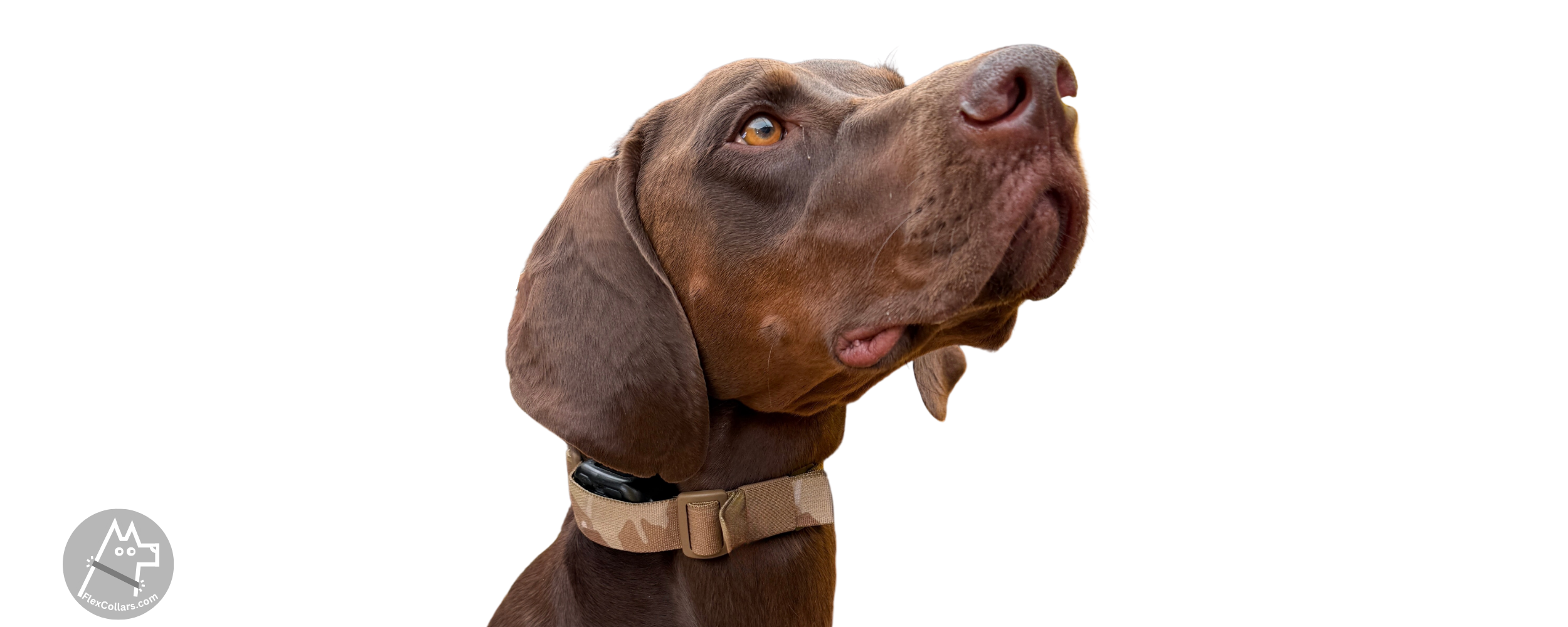
When a recall fails in the field, most handlers blame the remote first. They check the receiver-transmitter connection, the batteries, turn the level up, or decide the collar stopped working. One of the potential problems is that the cue never reaches the dog.
An e-collar can only communicate with your dog when the contact points are touching the skin. If the receiver moves even slightly at the wrong moment, the signal is lost, and from the dog's point of view, nothing happened at all. Understanding why this happens is the first step to fixing it.
1. The receiver moved - the contact is lost
Dogs shake, roll, scratch and put their heads down to sniff. These are completely normal movements, but each one can make the receiver slide around the neck or flip on the side. When that happens, the contact points lift away from the skin, often for just a second or two. Unfortunately, that second is usually the one that matters: the moment the dog spotted a deer, a sheep or another dog, and you pressed the button.
2. Thick coat and loose skin
Breeds with a dense coat or extra skin around the neck, such as Spaniels, Huskies and Malinois, make this problem worse. The contact points end up sitting in fur rather than on skin, so the dog feels very little, or nothing at all. The owner sees no response and turns the level up, believing the dog is ignoring the cue. In reality, the dog isn't being stubborn. It simply never felt it.
3. A strap that was tight at home
Many stock biothane straps feel perfectly secure when you fit them at home. The dog is standing still, and the collar looks snug. Once the dog starts moving, running and working, a stiff strap can ride up, twist and leave a gap between the contact points and the skin. A simple rule we always share with customers: if the collar moves when your dog shakes off, it is already too loose for work.
What good contact looks like
Good contact means constant contact and low stim levels. The whole point of a modern e-collar is to give a light, clear cue at the lowest level the dog can feel. That only works if the contact points stay in the same place on the skin. When they don't, handlers often chase the problem with higher and higher numbers, when what they really needed was a better-fitting strap. Consistent contact means you can train at lower levels, which is kinder for the dog and gives you much more reliable communication.
Before you leave home, check these four things:
The receiver and transmitter are both charged, switched on and connected to each other
The receiver doesn't move around the neck when your dog shakes
You can slide two fingers under the strap, and the bungee elastic sits over the throat
You've tested the connection before you leave the house and your dog responded
The correct strap and correct fitting are what let the cue arrive
The remote backs up a cue your dog already knows. The strap is what makes sure that cue actually reaches the dog. That's why we designed Flex Collars with a bungee section that keeps the receiver snug and stable on a moving dog, so it doesn't slide, flip or lose contact when your dog shakes, runs or works.
If you'd like a strap that stays put, you can see our full range here: Shop E-collar Straps
For step-by-step guidance on fitting, take a look at our fitting guides on product pages or YouTube.
————
Flex Collars