

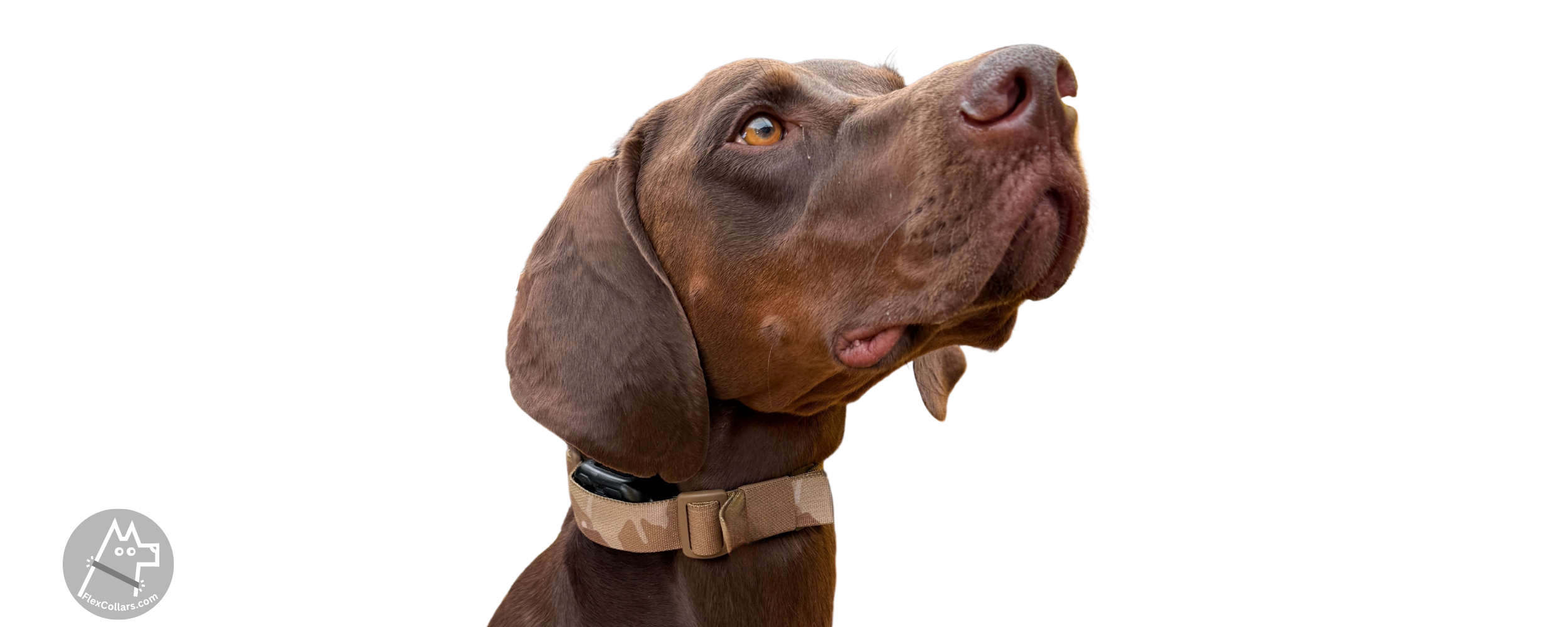
Why the E-Collar "Stops Working" in the Field
When a recall fails, most handlers blame the remote first. Often the cue never reached the dog, because the receiver slid, flipped or sat in fur. This post explains why contact gets lost, what good contact looks like, and the four checks to do before you leave home.

Why do dog owners start using an e-collar?
Dog Owners rarely start using an e-collar because they wanted another piece of kit. They start because recall failed when it mattered: a chase, another dog, a road. Food, a long line, and “pretty good” recall are not always enough when arousal is high. Used properly, the collar is how many dogs get more off-lead time without turning the walk into a gamble. Fit matters as much as the remote.
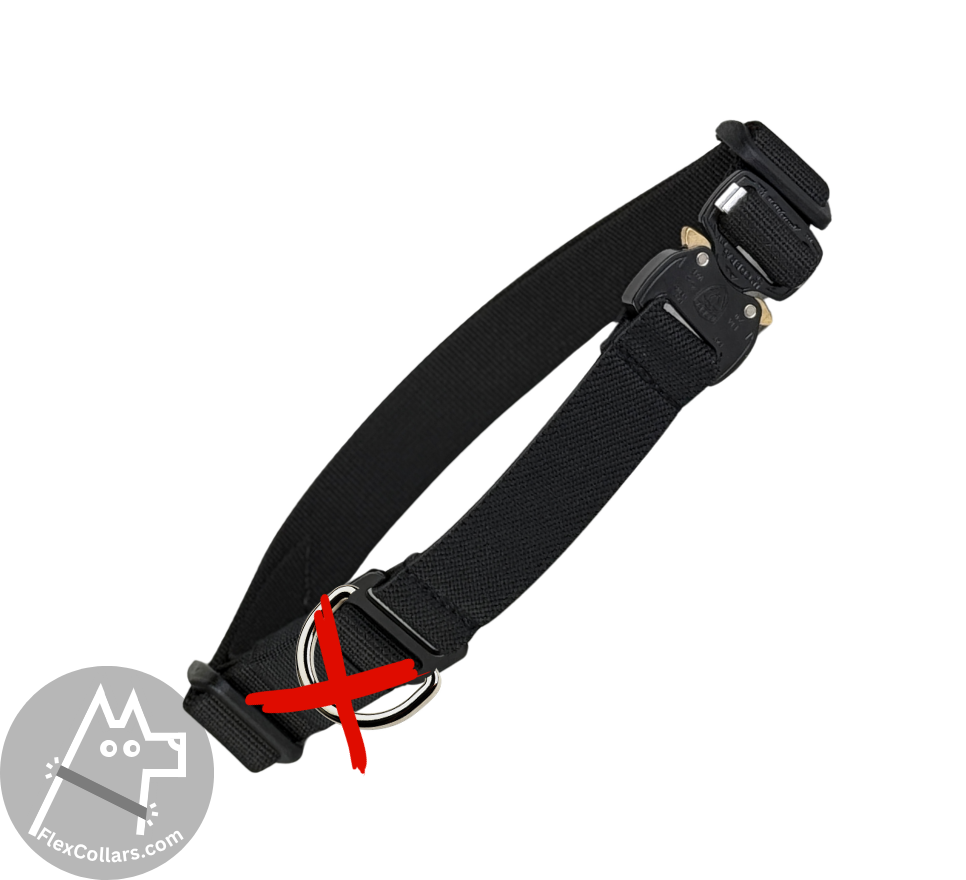
Why E-Collar Strap Doesn’t Have a D-Ring - And What’s the Alternative?
Most collars have a D-ring because that’s where you clip the lead. An e-collar strap is built differently. It exists for one reason only: to hold the receiver unit snug and stable against the dog’s neck so the contact points stay consistent.
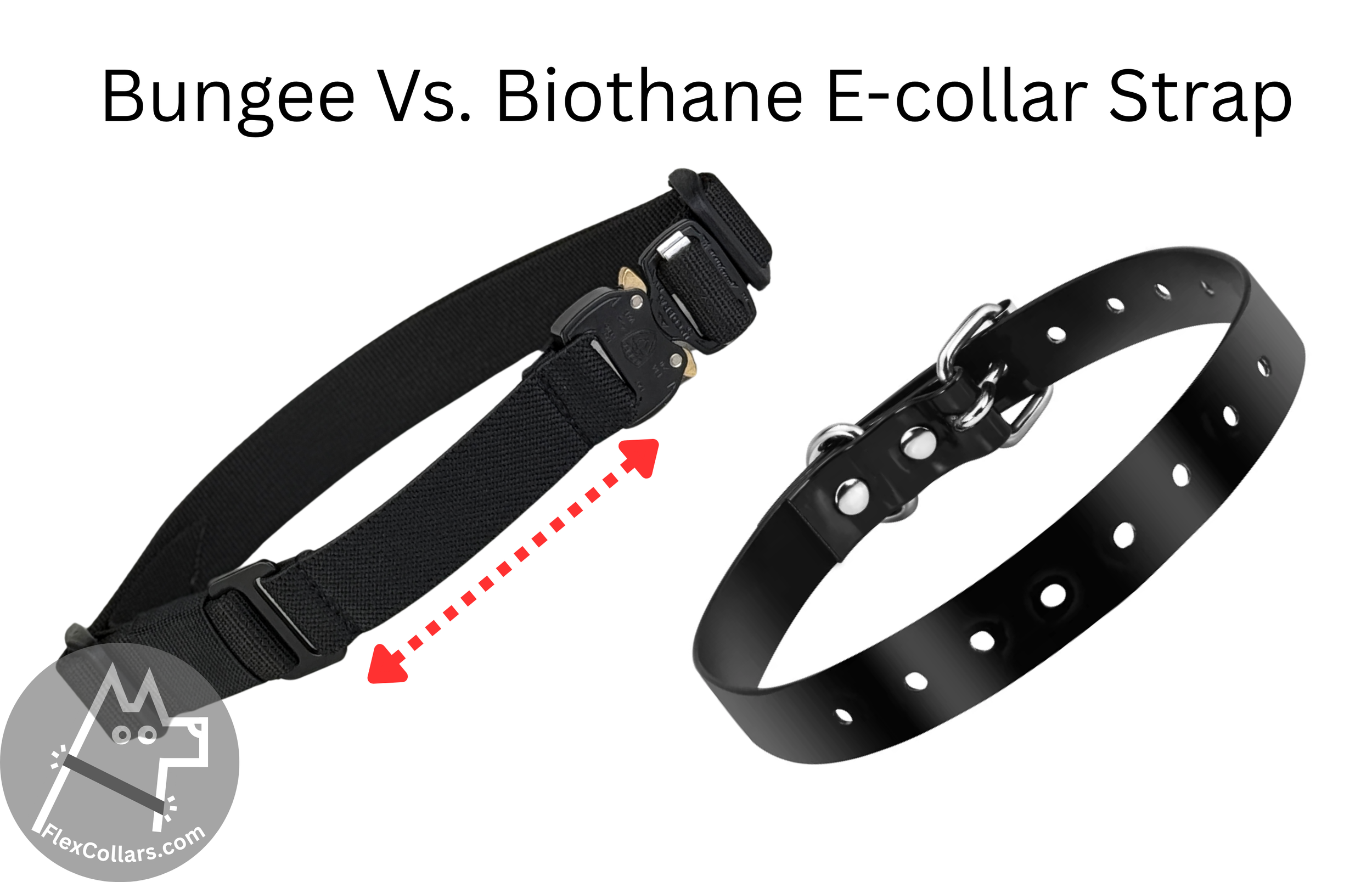
Bungee vs. Non-bungee E-collar Strap
Choosing the right strap for your e-collar can make a massive difference to comfort, contact quality, and training success. Two materials dominate the market: Biothane and Bungee

Correct E-collar Position on the Dog's Neck
Flex Collars. Correct E-collar Position on the Dog's Neck. Barry demonstrates how to wear FlexCollars strap (in Green Camo)